
Meat Processing & Slaughterhouses
Refrigeration in Ontario, Canada
In meat processing, temperature control is essential for safety, yield, compliance, and profitability. Across Ontario's meat industry, refrigeration systems are critical for maintaining product integrity from slaughter to distribution and are engineered for continuous operation under heavy biological load and strict Canadian food safety standards.
Processors in Northern and Southern Ontario face seasonal supply changes and strict cold chain demands. Without properly designed systems, even small temperature fluctuations can cause bacterial growth, product loss, carcass shrinkage, and compliance risks.


Industrial Refrigeration Systems for Meat Processing Facilities

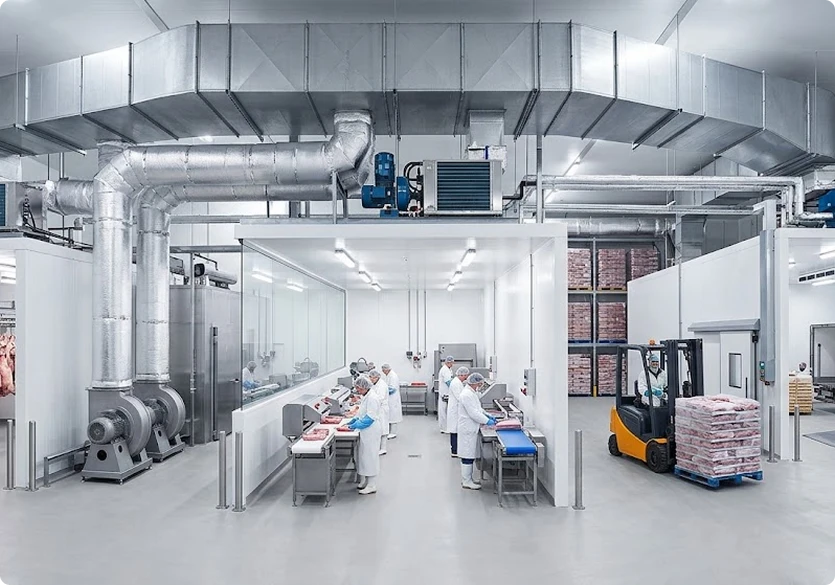
Meat processing plants operate through various controlled environments, each one requiring a specific approach. A single temperature setting cannot support the entire workflow.
Modern meat processing refrigeration systems are built as multi-zone infrastructures that maintain separate conditions for each and everything, such as slaughtering, chilling, cutting, aging, freezing, and storage.
These systems typically include:
- Walk-in meat coolers for initial carcass holding
- Blast chillers for instant temperature reduction
- Refrigerated processing rooms for cutting and packaging of meat
- Industrial freezers for long-term storage of meat
- Temperature-controlled distribution in cold rooms
Each zone has its own specific role in maintaining meat preservation refrigeration standards and ensuring consistent product quality across the cold chain.
The key engineering challenge is not just cooling; it is controlled heat removal at different biological stages of meat breakdown.
Temperature Control Requirements in Meat Processing Operations
Meat is very sensitive to instant temperature changes, especially immediately after slaughter. Muscle tissue of animals retains internal heat, and if that heat is not removed quickly from meat , bacterial growth begins at a microscopic level.
 Microbial activity
 Reduce moisture loss
 Stabilize protein structure in meat products
In commercial meat refrigeration Ontario facilities, maintaining these thresholds consistently is critical for compliance under HACCP-based food safety programs.
Meat Cooling Process and Thermal Control Sequence

Initial Surface Cooling
Immediately after slaughter, carcasses enter a rapid cooling stage where chilled airflow removes surface heat and helps reduce bacterial growth risks.

Controlled Heat Reduction
Temperature and airflow are carefully balanced to prevent surface hardening while allowing heat to move evenly from the core to the exterior.

Deep-Core Cooling
The refrigeration system extracts residual heat from dense muscles and joints, ensuring the internal temperature reaches safe and consistent levels.

Temperature Stabilization
Carcasses are transferred to holding coolers where temperatures equalize throughout the product, preparing the meat for processing, packaging, and storage.
Refrigeration Infrastructure in Meat Processing Plants
Nowadays, a modern meat processing facility is not just a single cold room. It is a connected and structured refrigeration network designed to maintain a continuous cold chain.

Walk-in Coolers and Cold Storage Systems
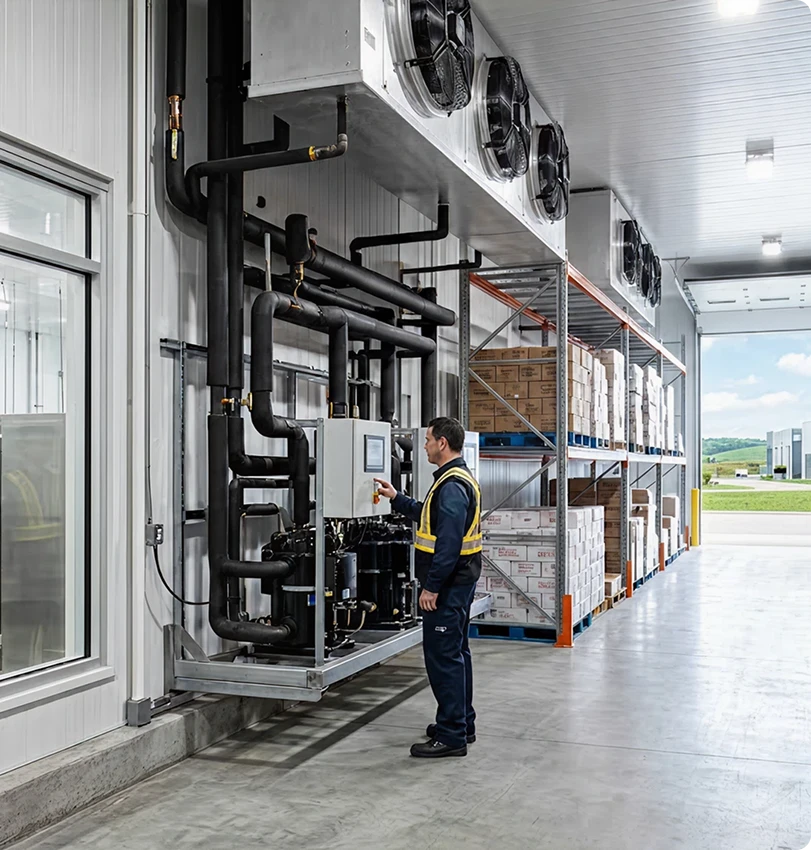
Walk-in coolers used in meat plants are specifically engineered for heavy-duty operation with constant loading cycles. These systems typically support short-term carcass storage and staging before the process of cutting or distribution.
In cold storage for meat cooling, insulation performance, airflow design, and humidity control are more important than raw cooling power. Poor design leads to dehydration losses and reduced carcass weight.

Blast Chillers and Rapid Freezing Systems
Blast chillers are very critical in preventing microbial growth after slaughter. Slow cooling allows ice crystals to form inside muscle tissue, damaging cell structure.
High-performance blast chillers reduce product temperature instantly, locking in moisture and maintaining structural integrity. This is important specifically for beef processing, refrigeration, and high-value cuts where texture and water retention directly impact market price.

Refrigerated Processing Rooms
Cutting and deboning areas require stable, worker-safe environments that still prevent bacterial growth.
These rooms usually operate between 4°C and 7°C, balancing the safety of food with operational comfort. Airflow needs to be controlled to prevent contamination while avoiding direct drafts that affect workers.
This is where refrigerated meat processing rooms differ significantly from standard cold storage; they must support human activity while maintaining strict hygiene standards.
Operational Risks Without Proper Meat Refrigeration Systems
When refrigeration systems are not designed specifically for meat processing environments, failures are not gradual; they are immediate and costly.
One of the most common issues is internal spoilage caused by retained heat in deep muscle tissue. Even when surface temperatures appear safe, internal sections can remain warm enough for bacterial activity to continue.
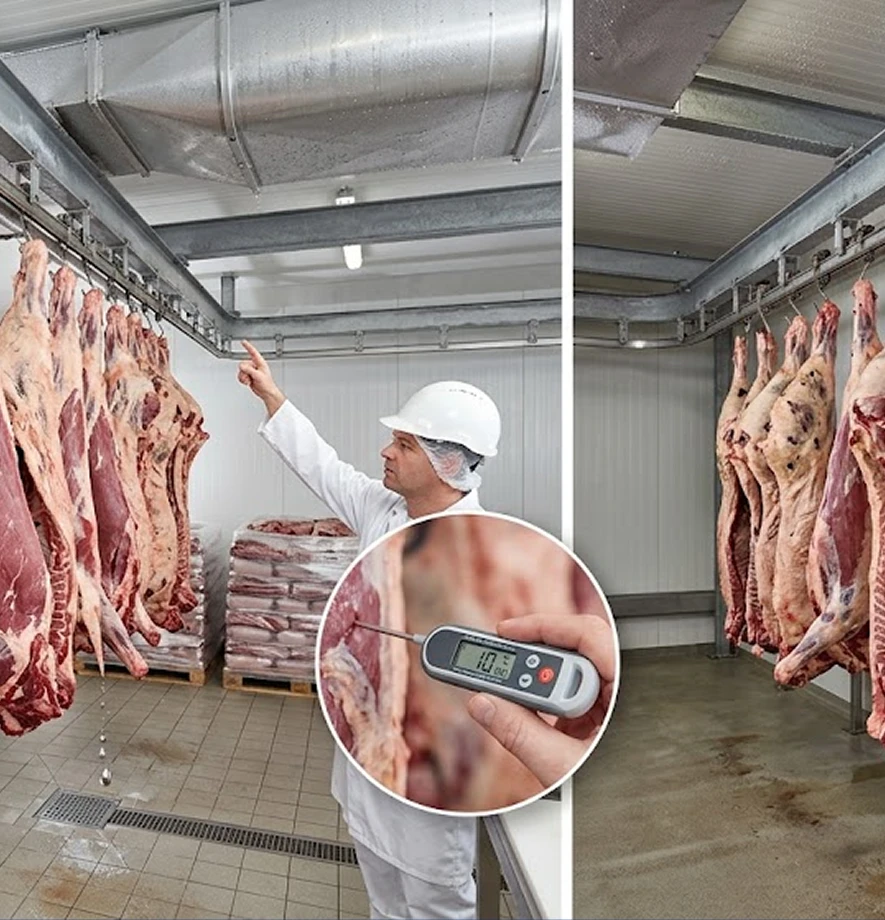
Another major issue is condensation. In slaughterhouse environments, frequent washdowns introduce large amounts of moisture. If temperature and airflow are not properly balanced, condensation forms on ceilings, rails, and equipment. This creates hygiene risks and violates food safety requirements.
Product shrinkage is also a hidden cost. Poor airflow design causes moisture loss during cooling. Even a small percentage of weight loss directly reduces revenue across large processing volumes.
These issues highlight why generic commercial cooling systems fail in slaughterhouse cold room installation scenarios.
Energy Efficiency and Modern Refrigeration Technology
Modern eco-friendly refrigeration technology is increasingly important in Canadian industrial facilities due to rising energy costs and environmental regulations.
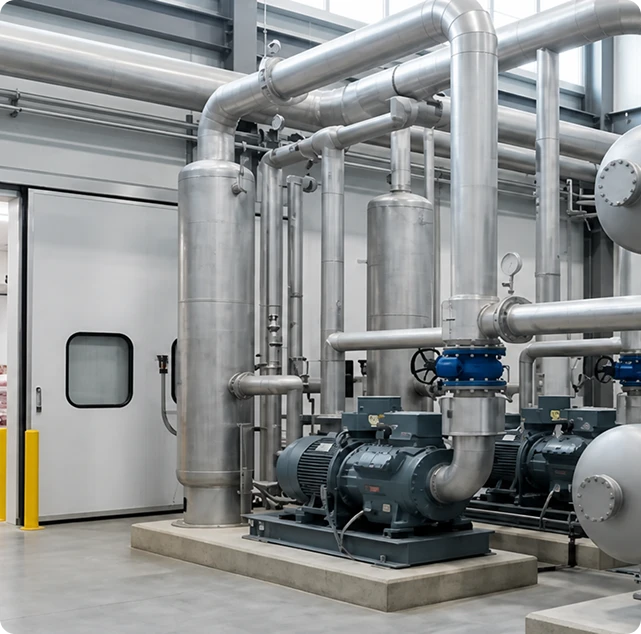
Advanced systems now use low-GWP refrigerants such as CO₂ (R-744) and ammonia (R-717), offering both efficiency and reduced environmental impact.
Smart control systems regulate compressor activity, fan speed, and defrost cycles based on real-time load conditions. This reduces unnecessary energy consumption while maintaining stable temperatures.
In large-scale meat warehouse cooling systems, energy optimization is not just an environmental concern, it is a direct operational cost factor that affects long-term profitability.
Hygiene, Compliance, and Food Safety Standards in Canada
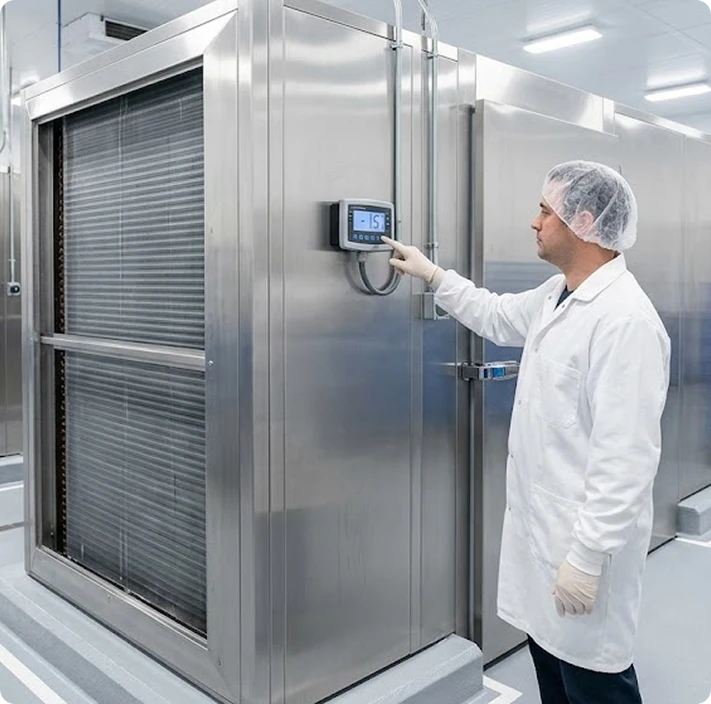
Meat processing facilities in Ontario must comply with strict food safety regulations, including HACCP-based programs and CFIA requirements. Refrigeration systems serve as critical control points, making accurate temperature monitoring and reliable performance essential for compliance.
Hygienic refrigeration equipment is designed to withstand daily washdowns, chemical cleaning, and high-moisture environments. Features such as corrosion-resistant materials, sealed electrical components, and anti-microbial coatings help reduce contamination risks and support food safety standards.
Ontario Regions with High Demand for Meat Refrigeration Systems
Demand for commercial refrigeration for meat plants is concentrated across Ontario due to strong agricultural production, livestock farming, and food distribution networks.
Key regions include:
- Southern and Southwestern Ontario (Guelph, London, Kitchener, Cambridge, Ingersoll), where large-scale meat processing plants and livestock operations are concentrated.
- Greater Toronto Area, including Toronto, Mississauga, Brampton, Vaughan, and Hamilton, where distribution centers, food processors, and industrial cold storage facilities operate at high capacity.
- Central Ontario regions such as Barrie, Guelph, and Waterloo, which support both local meat production and regional distribution networks.
- Eastern Ontario, including Ottawa and Kingston, where food processing and government-regulated facilities require strict compliance-grade refrigeration systems.
- Northern Ontario, including Sudbury and Thunder Bay, where remote logistics and temperature stability become critical due to climate variability and distribution distance.
- Across all these regions, demand continues to grow for meat cooling solutions in Canada that can handle scale, compliance, and energy efficiency simultaneously.
Custom Engineering for Meat Processing Facilities
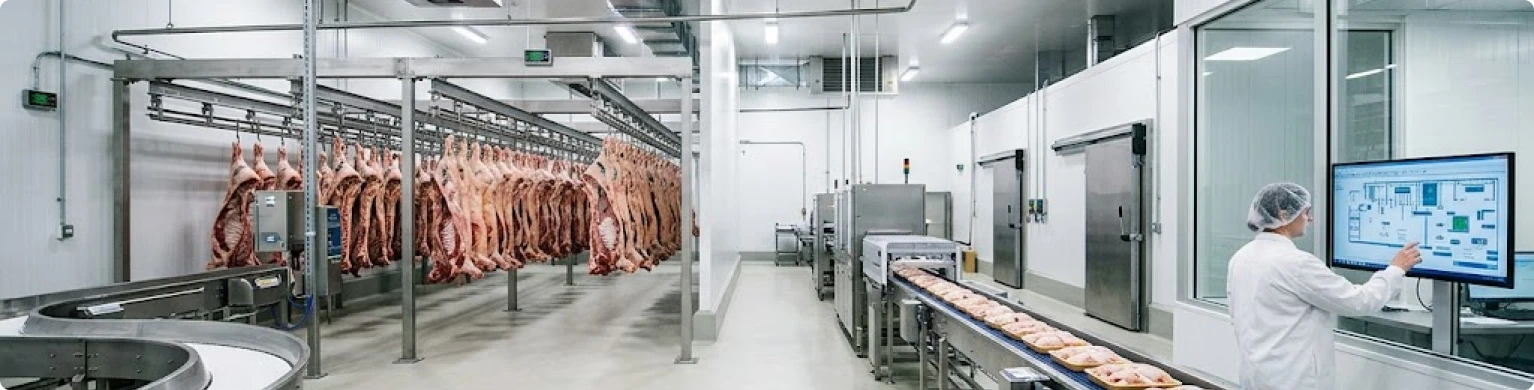
No two slaughterhouses operate the same way. Facility size, product type, and workflow design all influence refrigeration requirements.
Custom-built systems are often required for:
Engineering considerations include airflow design, load balancing, humidity control, and zoning separation between raw and processed areas.
This is where custom meat refrigeration solutions become essential for long-term operational stability.
Technical FAQ for Meat Plant Operations
Get in Touch with ColdMoose Refrigeration Experts
Fill out the form below to request a consultation, get a custom quote, or discuss your refrigeration needs. Our team will respond quickly to help you design the right cold storage solution for your farm or facility.
Head Office & Manufacturing
41 Ardelt Pl, Kitchener, ON N2C 2C8