
What is the Difference Between a Refrigeration System and an HVAC System?
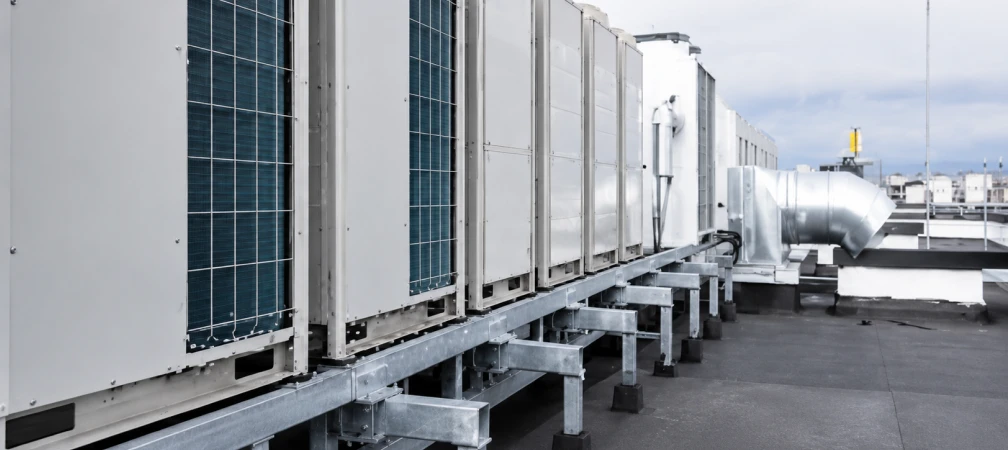
When those who own a business or manage a certain facility are to place cooling infrastructure, the most usual question is, what is the difference between a refrigeration system and an HVAC system? On the surface, the two technologies are identical. They both make things cold, they both use fans, and they both rely on the principles of thermodynamics. The two different areas are, however, not to be confused since this may result in catastrophic equipment failure, product waste, or a waste of energy through power usage.
Even while HVAC systems and refrigeration units both use the same vapor compression cycle, they are quite different in terms of their functions, technical difficulties, and operating factors. One is made to keep people comfortable and the air inside clean, while the other is made to process cooling and protect products under harsh situations.
We will break down the HVAC vs. refrigeration controversy in this in-depth blog, looking at the mechanical differences, chemical variances, and real-world uses of each. If you manage a commercial kitchen, a data center, or a logistics warehouse, it is important to know the distinctions between them in order to be successful.
Core Concepts – Defining The Systems
What is an HVAC System?
Accounting is the process of recording, organizing, analyzing, and reporting financial transactions of a business or individual.
In simple words, accounting helps you understand:
- How much money is coming in — revenue/income
- How much money is going out — expenses
- How much profit or loss you have
- What you own — assets
- What you owe — liabilities
- How much the owners have invested — equity
Simple example
Science of Cooling – How They Work
Both systems rely on the Second Law of Thermodynamics, which states that heat naturally flows from a warmer object to a cooler object. In order to turn this natural movement (heat leaving a cold room and going to a hot outside weather condition), one will need mechanical energy.
The Shared Mechanism: The Vapor Compression Cycle
Four Main Pillars of Accounting
- Recording Transactions:
The foundation of accounting. Every financial transaction—such as sales, purchases, payments, and expenses—is systematically recorded. - Classifying Information:
Financial transactions are organized into appropriate categories such as assets, liabilities, revenue, expenses, and equity, making the information easier to understand. - Summarizing Financial Data:
The recorded information is compiled into financial statements, such as the Income Statement, Balance Sheet, and Cash Flow Statement. - Analyzing & Reporting:
Financial information is examined to determine profitability, financial health, cash position, and business performance, helping owners and managers make informed decisions.
In short: Accounting takes financial transactions → organizes them → summarizes them → turns them into useful financial information
Where Divergence Occurs
The cycle is the same; however, depending on the system design, it varies based on the load.
- HVAC systemshandle “sensible heat” (changing temperature) and “latent heat” (removing moisture), tailored for humans.
- Refrigeration systemsmust handle massive “pull-down loads” (cooling hot food rapidly) and maintain temperatures far below freezing, requiring more robust compressors and specialized defrost cycles.
-
Humidity and Defrosting
In HVAC systems, the evaporator coil cools air but usually stays above freezing.Moisture condenses and drains away, which dehumidifies the space. In refrigeration, coils operate well below 32°F. Moisture freezes on the coil, forming ice that restricts airflow and can damage the compressor. Commercial refrigeration systems therefore require active defrost methods such as electric heaters or hot-gas defrost. HVAC systems generally do not.
Why the Confusion? Integrated Systems
The line between the two is blurring due to modern energy-efficient technologies.
The Heat Pump Anomaly
A heat pump is technically an HVAC device that can reverse its cycle to provide heating. However, the technology is identical to refrigeration.
systems
In modern grocery stores, you might find a massive “rack” of compressors in the back. This single system might handle the HVAC for the store floor and the refrigeration for the display cases. This assists in the recovery of heat, where the waste heat in the fridges is used to heat the store during winter. This integration requires technicians who are experts in both HVAC and refrigeration Services.
Maintenance – A Critical Difference
The difference in maintenance protocols in these systems is very high.