
Benefits of Installing a Walk-in Refrigerator for Businesses in Ontario, Canada
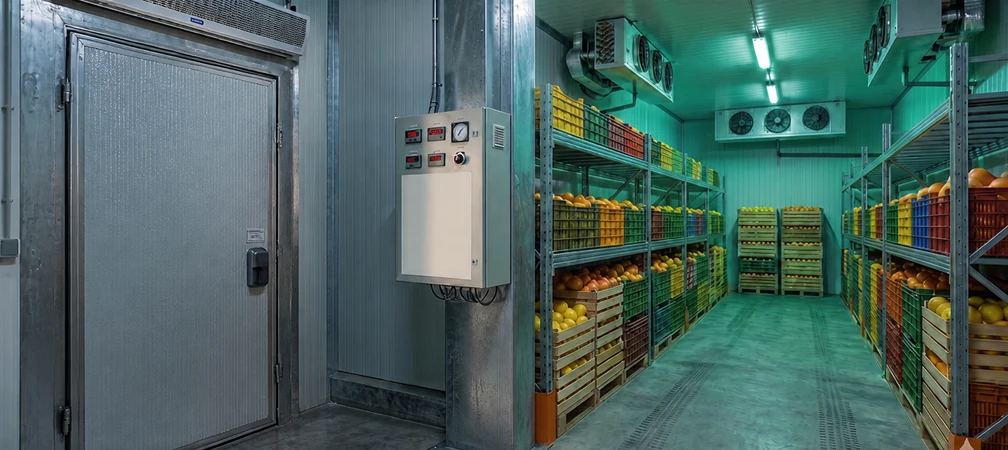
If you operate a commercial kitchen, grocery store, or food business in Ontario, including regions like the Greater Toronto Area to Ottawa, you already understand the importance of keeping your food stock refrigerated, fresh, and readily available at all times.
Overloading a standard commercial walk-in refrigerator creates a logistical nightmare. Packing units beyond their capacity restricts vital airflow, leading to uneven temperature zones, accelerated food spoilage, and increased maintenance costs from overworked compressors.
When you do not have enough storage space to accept bulk wholesale deliveries, your day-to-day operations become less efficient, directly affecting your business performance and customer experience.
It is extremely difficult for growing businesses to rely solely on standalone refrigerators while managing inventory and daily operations efficiently. Standalone refrigeration units can also become costly and inefficient over time, especially as storage demands continue to increase.
To make operations smoother and more efficient, we at COLDMOOSE have helped a wide range of food businesses across Ontario with advanced cold storage solutions and commercial refrigeration equipment.
With an experienced and dedicated team, we understand that a properly installed walk-in refrigerator in Ontario does far more than simply solve storage limitations.
Upgrading to a modern walk-in cooler or walk-in freezer can help lower energy consumption compared to running multiple aging units, simplify inventory management, and support food safety compliance during public health inspections.
Whether you operate a restaurant, grocery store, food processing facility, or a large cold storage facility, investing in a professional commercial refrigeration system can improve efficiency, protect your products, and support long-term business growth.
Maximize Storage Space and Improve Inventory Management
With increased storage space, you get the opportunity to organize your area more efficiently instead of using multiple freezers in a small space. One custom walk-in refrigerator can fulfill all the requirements. Specifically for a growing business, it is a vital step.
It can significantly improve your storage space and reduce your overall maintenance and energy costs. A commercial walk-in refrigerator not only improves overall space and saves energy costs, but it also solves storage and poor inventory management problems.
More Usable Storage Space
Usually, traditional refrigerators take a lot of space because of their shelf partitions and several built-in components. These problems severely impact businesses, specifically small businesses that don’t have larger spaces. It also blocks proper airflow.
A walk-in refrigerator offers:
- More usable storage space
- Adjustable shelving
- Better airflow around products
- Consistent cooling throughout the unit
With open space, food stays fresher for a longer time, and storage becomes easier to manage for business owners.
Faster and More Efficient Workflow
Traditional refrigerators usually have limited storage, which forces staff to spend extra time searching for products, moving items around, and organizing deliveries.
On the other hand, a walk-in cooler provides a wider area and dedicated storage so products can be arranged by category.
Businesses can also follow a First-In, First-Out (FIFO) inventory system more effectively.
Benefits include:
- Faster product access
- Easier inventory tracking
- Reduced loading and unloading time
- Better organization for staff
Buy in Bulk and Save Money
One of the biggest advantages of a walk-in refrigerator setup is the ability to buy inventory in larger quantities. As it can store food in larger volumes, it helps reduce operational costs and provides better protection against supply shortages.
Superior Food Preservation and Absolute Temperature Control
In the food business, the most essential thing is a stable temperature, which keeps stock safe and reduces loss. Basic fridges often fail under pressure, especially when used frequently. But we at COLDMOOSE design industrial refrigeration systems that stay stable even in busy commercial kitchens.
Maintaining the Critical Food Safety Zone
It is a must that food stays out of the bacterial danger zone between 4°C and 60°C. And by opening the door of a normal reach-in fridge, cold air starts to escape quickly. This forces the small compressor to recover slowly, which leads to temperature swings.
On the other hand, a walk-in refrigerator handles these things better. It uses dedicated strong evaporator coils specifically designed for each food type and powerful condensing units. These systems bring the temperature back down quickly after each door opening, keeping the inside stable.
Reach-In System: Door opens → cold air escapes → slow recovery → temperature fluctuates.
Industrial System: Door opens → strong cooling kicks in → fast recovery → stable temperature
The Dual-Zone Combo Setup
For businesses with various storage needs, a Walk-in Cooler & Freezer Combo is a suitable option. Instead of installing two separate systems, both zones are built together with a shared insulated wall.
WALK-IN COOLER
2°C storage (fruits, dairy)
WALK-IN FREEZER
-18°C storage (meat, frozen goods)
This setup lets you store fresh goods on one side and frozen products on the other without needing separate systems.
Protecting the Cold Chain
The cold chain must stay unbroken from delivery to final use. Even minor temperature fluctuations can cause harm to food texture and reduce shelf life significantly.
Modern cold chain storage systems are designed to prevent this by keeping temperatures stable and trackable in real time. This reduces overall spoilage, protects quality, and cuts hidden food waste costs.
Meeting Ontario Food Safety Regulations and Achieving Energy Efficiency
Running a business in Ontario means following strict Food Safety Regulations while also managing high operating costs. Your cold storage must keep food safe and reduce electricity use. Upgrading to energy-efficient refrigeration helps with both.
Navigating Ontario Food Safety Regulations
In Ontario, food safety rules are set under Ontario Regulation 493/17 (Food Premises) under the Health Protection and Promotion Act. Health inspectors enforce strict temperature limits for food that can spoil easily.
Storage Type and Required Temperatures:
- Refrigerated storage (cold holding): 4°C (40°F) or colder
- Recommended safe range: 1°C to 2°C (34°F to 36°F)
- Freezer storage (frozen holding): −18°C (0°F) or colder
- Recommended safe range: −20°C to −22°C (−4°F to −8°F)
Inspectors also check temperature records. If your fridge goes above 4°C for more than two hours during busy use, you may have to throw away stock, face fines, or even temporary shutdowns.
A proper walk-in refrigerator system gives stable cooling even when doors open frequently. These units are built with NSF-approved surfaces that are easy to clean and support food safety compliance.
The Physics of Insulation: R-Value Demystified
Cold room efficiency depends on insulation strength, called R-value. It shows how well a material stops heat from entering.
Hot outdoor air (around 30°C) is blocked by thick insulation to keep the inside near 2°C.
Modern walk-in refrigerator systems use thick polyurethane foam panels with high insulation ratings:
- Coolers: around R-25
- Freezers: around R-32
This reduces heat transfer, especially during hot Ontario summers.
Cutting the Cord on High Utility Bills
Commercial refrigeration runs all day and night, making it one of the biggest electricity costs for a business. Using multiple old fridges increases energy waste.
Multiple reach-in fridges:
- Several compressors running separately
- More heat inside the workspace
- Higher total energy use
Walk-in refrigerator system:
- One main external compressor
- Centralized cooling system
- Lower overall energy waste
Modern systems also use:
- Electronically Commutated Motors (ECMs)
- Smart defrost control
- LED lighting
The Value of Turnkey Custom Walk-Ins over Flat-Pack Kits
When investing in commercial infrastructure, choosing a standard flat-pack kit often creates long-term operational problems. These kits are built in fixed sizes and assume a perfect square room. In real commercial spaces in Ontario, this is rarely true.
Engineering Around Architectural Constraints
A custom walk-in refrigerator removes these limitations. The insulated panels are designed according to your exact floor plan, so every inch of space is used properly.
Flat-Pack Kit: fixed structure → wasted space
Custom Walk-in: panels shaped to space → full utilization
Certified Safety and Structural Compliance
A turnkey solution from a Canadian Refrigeration Company ensures your system meets strict safety and building standards.
- CSA (Canadian Standards Association)
- NSF (National Sanitation Foundation)
Custom systems use fire-rated polyurethane panels to meet building codes and support food safety compliance.
Proactive System Protection
A proper cold room setup depends on both correct design and long-term maintenance. A turnkey service includes accurate load calculations so compressors and evaporator coils match actual storage needs.
TURNKEY SYSTEM LIFECYCLE MANAGEMENT
[ Load Calculations ] → [ Installation ] → [ System Monitoring ]
- Ongoing Maintenance *
Using quality commercial refrigeration equipment along with scheduled refrigeration maintenance reduces breakdown risks and improves system lifespan.
Protecting Your Inventory and Scaling Your Business with COLDMOOSE
Improving your storage system is an important step for long-term business growth. Moving from small, crowded reach-in units to a properly designed walk-in refrigerator system removes daily workflow issues, lowers monthly electricity costs, and improves cold storage solutions efficiency.
[ Current Grid Bottlenecks ] —- Upgraded with COLDMOOSE —-> [ Scalable, High-Efficiency Workspace ]
At COLDMOOSE, we design, build, and maintain strong commercial cooling solutions based on your space and daily operations. Don’t let limited storage slow your work or affect your profit.
Visit coldmoose.ca today or book a professional consultation with our Ontario engineering team to create a custom walk-in refrigerator system that can scale your business.
FAQs
Q: What fire safety ratings do custom walk-in panels need to pass Ontario Building Code inspections?
Under Section 3.1.5.5A of the Ontario Building Code, foam-insulated panels must have proper CAN/ULC-S138 or CAN/ULC-S102 fire safety certification. COLDMOOSE uses approved fire-rated panels with low flame spread and controlled smoke rating, helping ensure safe installation and smooth inspection approval without compliance issues.
Q: Do I need a TSSA-licensed technician for walk-in refrigeration installation in Ontario?
Yes. Any commercial refrigeration system with higher motor capacity or complex piping must be installed by a TSSA (Technical Standards and Safety Authority) licensed refrigeration technician. Using unlicensed installers can cause insurance problems and may also violate Ontario safety rules.
Q: How do actual vs nominal measurements affect the real kitchen space of a custom unit?
Many standard suppliers show “nominal sizes,” which means the real usable space is smaller than advertised because of panel thickness. For example, an 8′ × 10′ unit may end up slightly smaller inside. COLDMOOSE designs using exact measurements so you get full, usable cold room space with no hidden reduction.
Q: When is a reinforced floor needed for a commercial walk-in cooler?
A reinforced floor is needed when the unit will carry heavy loads like rolling racks, pallets, or bulk storage barrels. In such cases, a normal light floor can weaken over time. A proper setup uses a strong base structure with thick plywood support and a non-slip metal surface for durability and safety.
Q: Can I install a custom walk-in cooler or freezer outdoors?
Yes, but it must be designed for outdoor conditions. This includes a weather-protected roof, proper sealing against rain and moisture, and refrigeration components built to handle low outdoor temperatures in Ontario winters. In colder climates, systems also use added heating protection so the unit can operate safely even in extreme cold conditions.